G.T Road Khanna-141401, Punjab, India
- Talk to Us +91 99 8857 5151
- Mail Us Info@gopalsteelwork.com


India’s steel manufacturing sector is poised to enter a more mature and performance-driven phase in 2026. Flat bar steel manufacturers are no longer evaluated only on production capacity, but on precision, process control, sustainability, and application-specific expertise. As infrastructure development, industrial fabrication, and agricultural equipment manufacturing continue to expand, flat bars remain a critical input material across sectors.
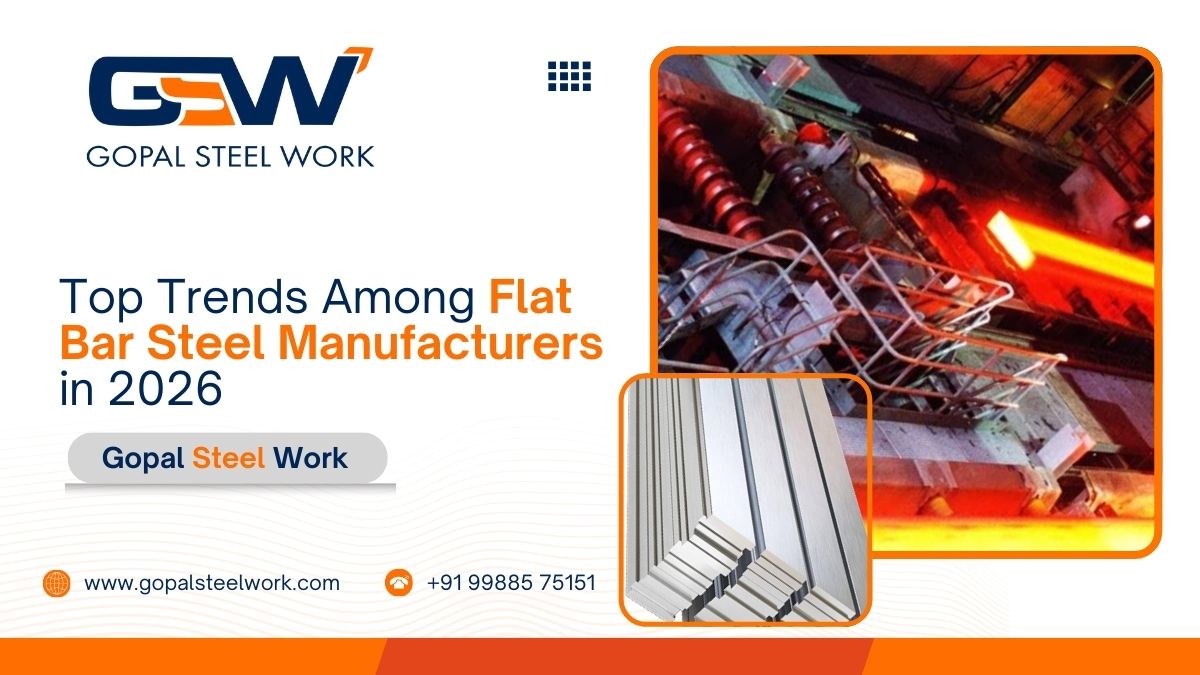
Let’s explore the key trends shaping flat bar manufacturing in India in 2026.
In 2026, dimensional accuracy has become a baseline expectation rather than a premium feature. Fabricators and OEMs are increasingly requiring flat bars with tight tolerances to reduce machining time and material waste.
Manufacturers are focusing on:
Precision-cut mild steel flat bars are particularly in demand for industrial frames, structural assemblies, and agricultural equipment, where consistency directly impacts performance and assembly speed.
Flat bar manufacturing is shifting away from a one-size-fits-all material supply. Buyers now prefer steel grades tailored to specific end uses rather than generic specifications.
In 2026:
This trend allows manufacturers to deliver flat bars that perform better in real operating conditions, improving durability and service life.
Sustainability is no longer optional in steel manufacturing. Flat bar producers in India are aligning operations with environmental and efficiency goals.
Key sustainability practices include:
Manufacturers who invest in cleaner production methods are gaining preference among large buyers, infrastructure projects, and export-oriented clients.
In 2026, buyers are prioritising manufacturers with a strong regional presence and reliable delivery timelines. Localized production reduces transportation delays, improves communication, and ensures faster response to urgent requirements.
Flat bar manufacturers with strategically located facilities can:
This trend is especially relevant for North India, where infrastructure, fabrication, and agricultural machinery industries continue to grow rapidly.
Automation and digital monitoring are now deeply integrated into flat bar production. Manufacturers are investing in advanced rolling controls, inspection systems, and traceability tools.
Technology adoption in 2026 has led to:
These advancements help manufacturers meet stricter quality expectations while maintaining production efficiency.
Agriculture remains a major growth driver for flat bar steel in India. Demand for flat bars used in rotavator blades, tiller blades, cultivators, and farm implements continues to rise.
Manufacturers supplying this segment focus on:
Flat bars designed for agricultural machinery must withstand continuous stress, making material quality and processing discipline critical.
As an established flat bar manufacturer in India, Gopal Steel Work aligns closely with these evolving industry trends. The company focuses on structured manufacturing practices, consistent quality control, and reliable supply for construction, fabrication, and industrial applications.
With emphasis on:
Gopal Steel Work represents the direction in which flat bar manufacturing is moving in 2026.
The flat bar steel manufacturing industry in India is evolving beyond volume-based supply. Precision, sustainability, technology adoption, and application understanding now define successful manufacturers.
As India continues to build, mechanize, and modernize, flat bars will remain an essential structural element. Manufacturers who adapt to these trends will not only meet demand but set new standards for reliability and performance in 2026 and beyond.
Tags: Flat Bar, flat bar in Punjab, Flat Bar Manufacturer in India, Flat Bar Supplier in India, Heavy Flat Bar Manufacturer in India, Heavy Flat Bar Manufacturer in Punjab, MS Flat Bar Manufacturer in India, MS Flat Bar Manufacturer in Punjab, Steel Flat Bar Manufacturer in India, steel manufacturer in India, steel manufacturer in Punjab